Gear2Go
A Next.js & Supabase P2P rental platform for sports equipment with Stripe payments and real-time messaging.
SCREENSHOTS.DIR
CLICK TO ENLARGE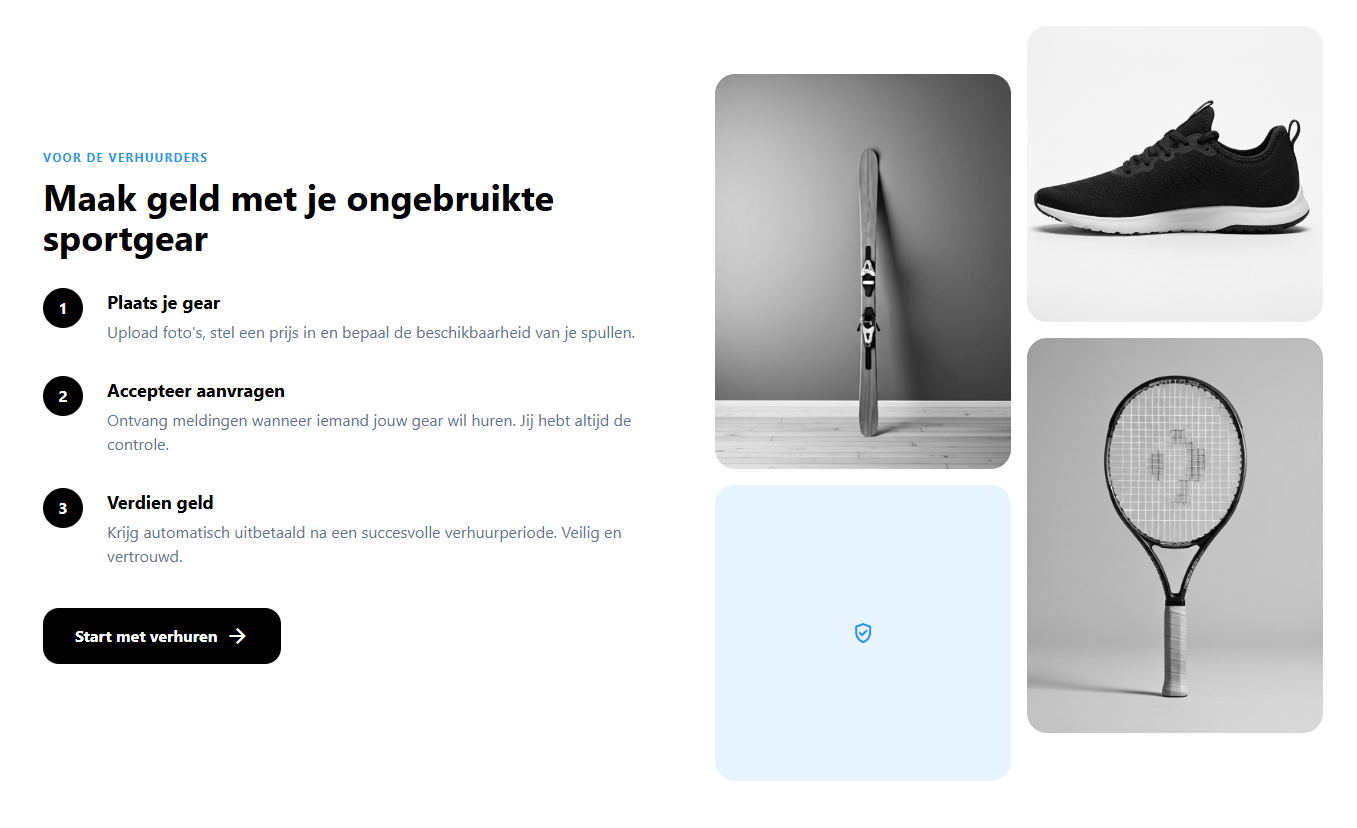
README.TXT
Gear2Go: The Peer-to-Peer Sports Rental Revolution
The Genesis of the Idea
Gear2Go originated from a fascinating challenge presented by a student company inside HZ University of Applied Sciences. The problem they wanted to solve was something almost everyone has experienced: wanting to try out a new sport, but being entirely put off by the massive upfront cost of the equipment.
If you want to try sailing, tennis, or road cycling, buying a high-end bike or a surfboard just for a weekend test-run is financially irresponsible. But at the same time, thousands of people have expensive racing bikes and paddleboards just gathering dust in their garages, being used maybe once or twice a year.
The solution? Gear2Go. A peer-to-peer (P2P) rental platform designed specifically for sports equipment. Think of it as a specialized "Marktplaats" focused entirely on connecting active individuals with local gear owners.
A High-Stakes Development Competition
This wasn't a standard relaxed school assignment. The client turned the development process into a fierce Proof of Concept (POC) competition. We were given exactly four weeks to architect, design, and build a working MVP to present directly to investors.
To make matters even more intense, our student team was competing directly against a hired senior developer who was building their own version of the platform simultaneously. The winning POC would be the one used to secure investor funding, and if our student team won, the prize money would go directly back into the school's education program to fund events and future projects.
The pressure was on. We didn't just need something that worked; we needed something that looked professional, felt incredibly fast, and proved to investors that the business model was technically viable.
Architecting the Marketplace
We had a massive scope to deliver within the 4-week sprint. The platform required several highly complex modules to function correctly as a P2P rental marketplace:
- The Digital Marketplace: A highly performant, mobile-first interface where users could browse available gear categorized intelligently (Watersports, Wintersports, Cycling, Ball Sports, Transport, etc.). We adopted a sleek, minimalist black-and-white theme based on the client's logo to give it a premium, trustworthy feel.
- End-to-End Chat & Negotiation: Renting equipment requires coordination. We needed to build a real-time, secure chat module where renters and lenders could discuss pickup times and negotiate rental terms seamlessly.
- Interactive Local Maps: A visual, Leaflet-powered map interface displaying local gear availability via GPS markers, allowing users to find equipment within walking or driving distance.
- The Review System: Trust is the currency of any P2P platform. We needed a dual-sided review system so lenders could ensure they were renting to reliable people, and renters could verify the quality of the gear.
The Legal and Technical Challenge: Escrow Payments
The absolute biggest hurdle we faced wasn't the UI or the chat system, it was the payment architecture.
In the Netherlands, it is highly regulated and often illegal for a digital platform to directly hold and manage user funds without proper financial licenses. We couldn't just accept money into a central bank account and manually pay out lenders.
To solve this, we had to architect a fully compliant escrow system. We integrated Stripe Connect to handle the heavy lifting. Our system was designed to securely hold the renter's payment, automatically deduct a 5% platform commission for Gear2Go, and securely route the remaining funds directly to the lender's bank account once the rental was complete. Implementing this legally compliant payment split logic within the tight 4-week deadline was a massive technical victory.
The Solution & Tech Stack
To beat a senior developer and impress the investors, we utilized a cutting-edge modern stack:
- Next.js: We utilized the React framework to deliver optimal server-side rendering, ensuring the marketplace loaded instantly and provided a flawless mobile-first user experience.
- Supabase (PostgreSQL): We relied on Supabase to handle our complex relational database schemas, secure user authentication, and power the real-time WebSockets required for the instant chat module.
- Stripe Connect: Powering the complex legal escrow system, dynamic commission splits, and automated payouts to keep the platform legally compliant.
- Tailwind CSS: Allowing us to rapidly implement the strict mobile-first, black-and-white UI requirements efficiently.
The Final Result
In just 4 weeks, we delivered a fully functional, highly secure, and visually stunning Proof of Concept. We successfully navigated the complex legal requirements of P2P payments, implemented real-time chat, and delivered a mobile-first marketplace that definitively proved the business model was viable.
The project stands as a testament to the fact that a dedicated student team, armed with modern full-stack tools and a ruthless focus on core functionality, can deliver investor-ready software under immense competitive pressure.