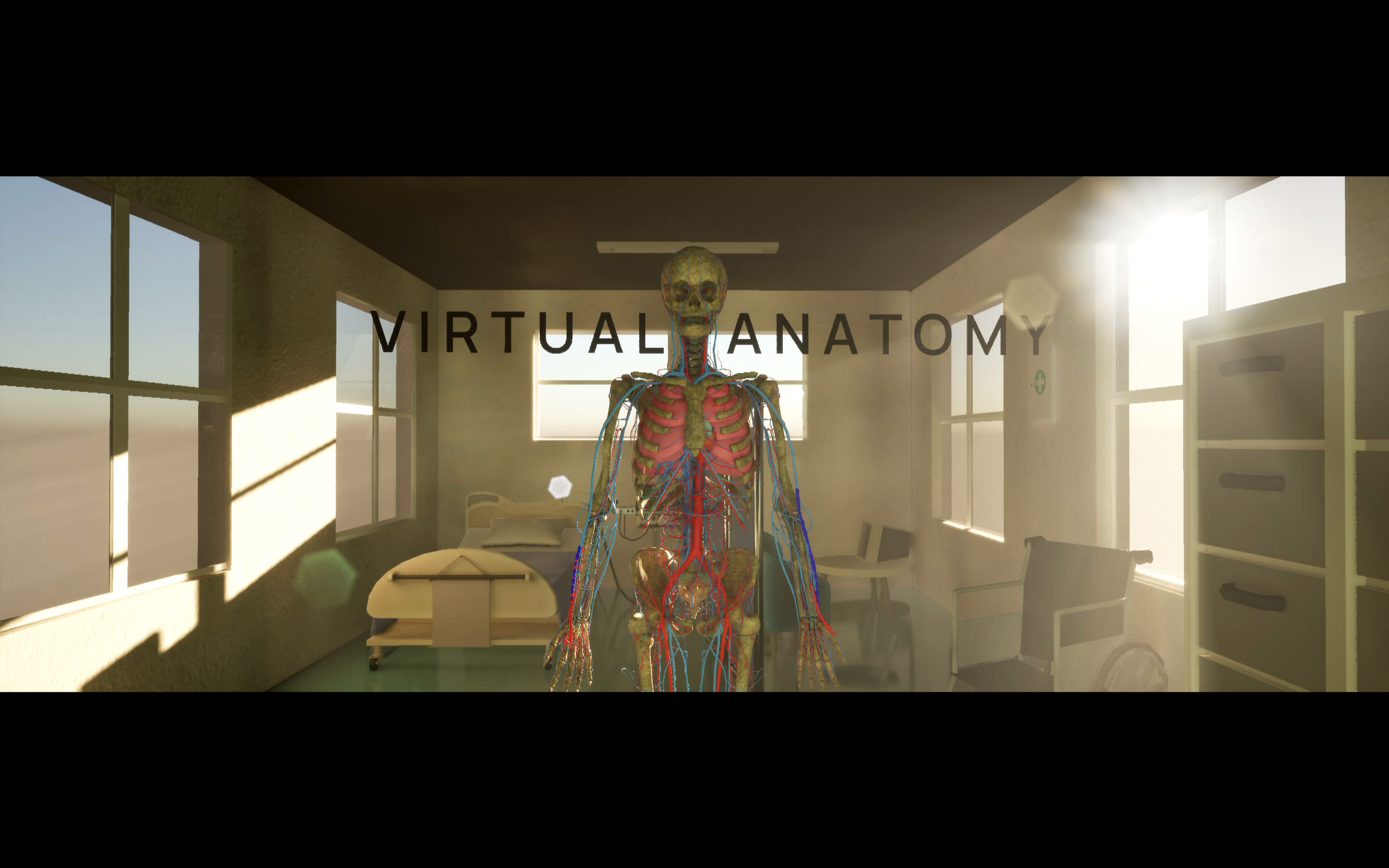
Virtual Anatomy project
3D Human anatomy in Unreal Engine 5, developed for nursing students
Tech Stack
Virtual Anatomy: Building an Interactive 3D Learning Tool for Medical Education
Project Overview
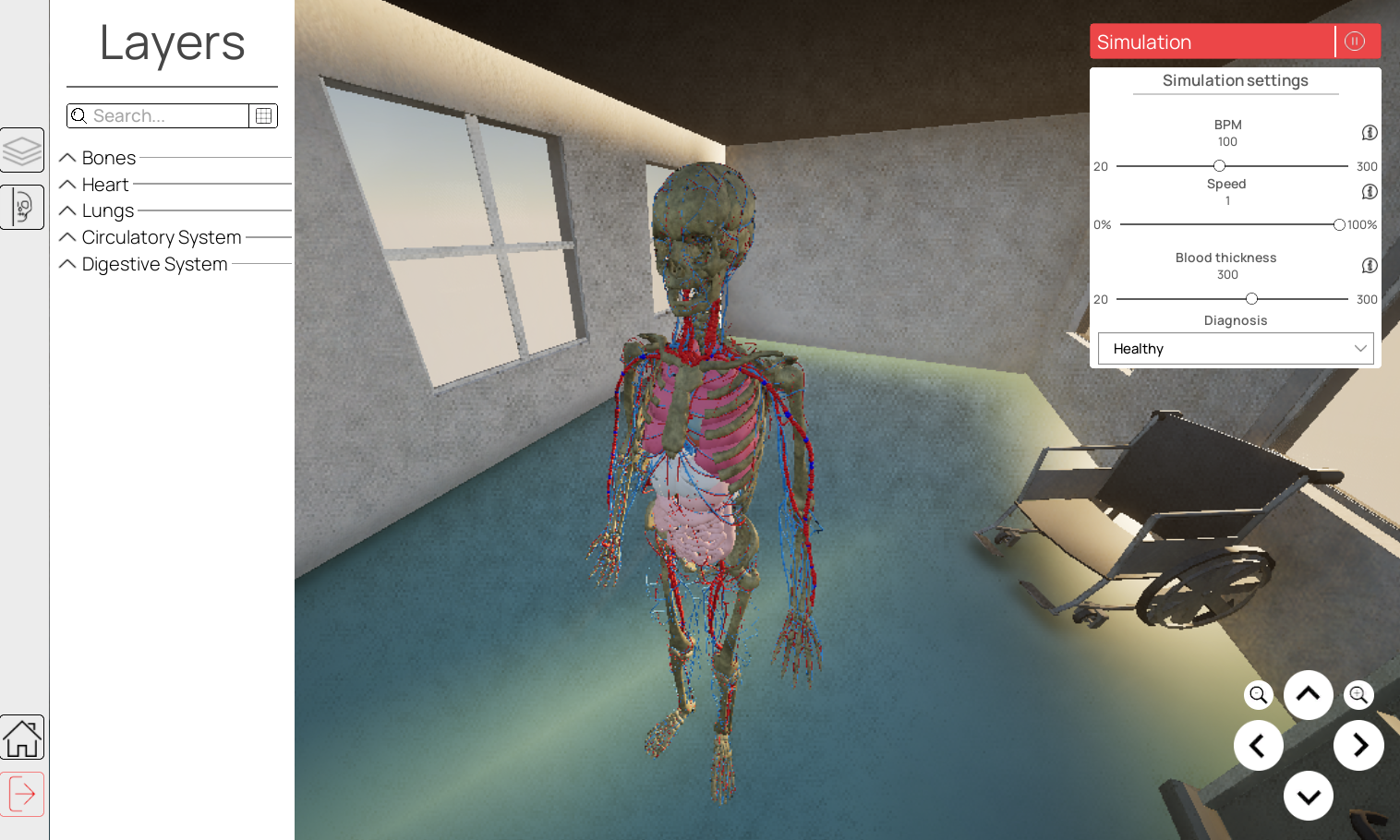
During my internship at the Joint Research Centre Zeeland (JRCZ), I contributed to the development of Virtual Anatomy — an interactive 3D anatomical visualization application built in Unreal Engine for the Nursing program at HZ University of Applied Sciences.
The application enables students to explore a highly detailed, anatomically accurate 3D human model, enhancing their understanding of human anatomy through immersive, hands-on digital learning.
The Organization
JRCZ is a collaborative hub between educational institutions in Zeeland, including Scalda (MBO), HZ University of Applied Sciences, and University College Roosevelt. The center focuses on practical education, research, and innovation.
I worked within the Data Science Lab, where interactive applications, 3D visualizations, and data-driven tools are developed. The lab fosters cross-disciplinary collaboration between developers, designers, and researchers.
Project Goals
The primary objective was to deliver a stable, user-friendly version of the Virtual Anatomy application that could be used by nursing students and demonstrated to stakeholders at HZ Vlissingen.
Key Features of the Application:
- 360° Model Interaction — Rotate, zoom, and pan the 3D anatomical model
- Layer System — Show/hide organ systems and anatomical layers
- Hierarchical Tree View — Navigate organs grouped by body systems
- Anatomical Labels — Identify and learn body part names
- Environment Switching — Toggle between minimalist and hospital settings
- Cross-Section Slicer — View internal cross-sections of the body
My Role & Contributions
Technical Development
Working alongside my colleague Anan, I focused on stabilization, bug fixing, and feature improvements:
Bug Fixing & Stability
- Resolved critical EXCEPTION_ACCESS_VIOLATION errors in packaged builds
- Added null-checks and logging throughout the codebase to prevent crashes
- Fixed the slicer functionality for anatomical cross-sections
- Stabilized GameMode, User, and component interactions
- Disabled unstable UI elements affecting user experience
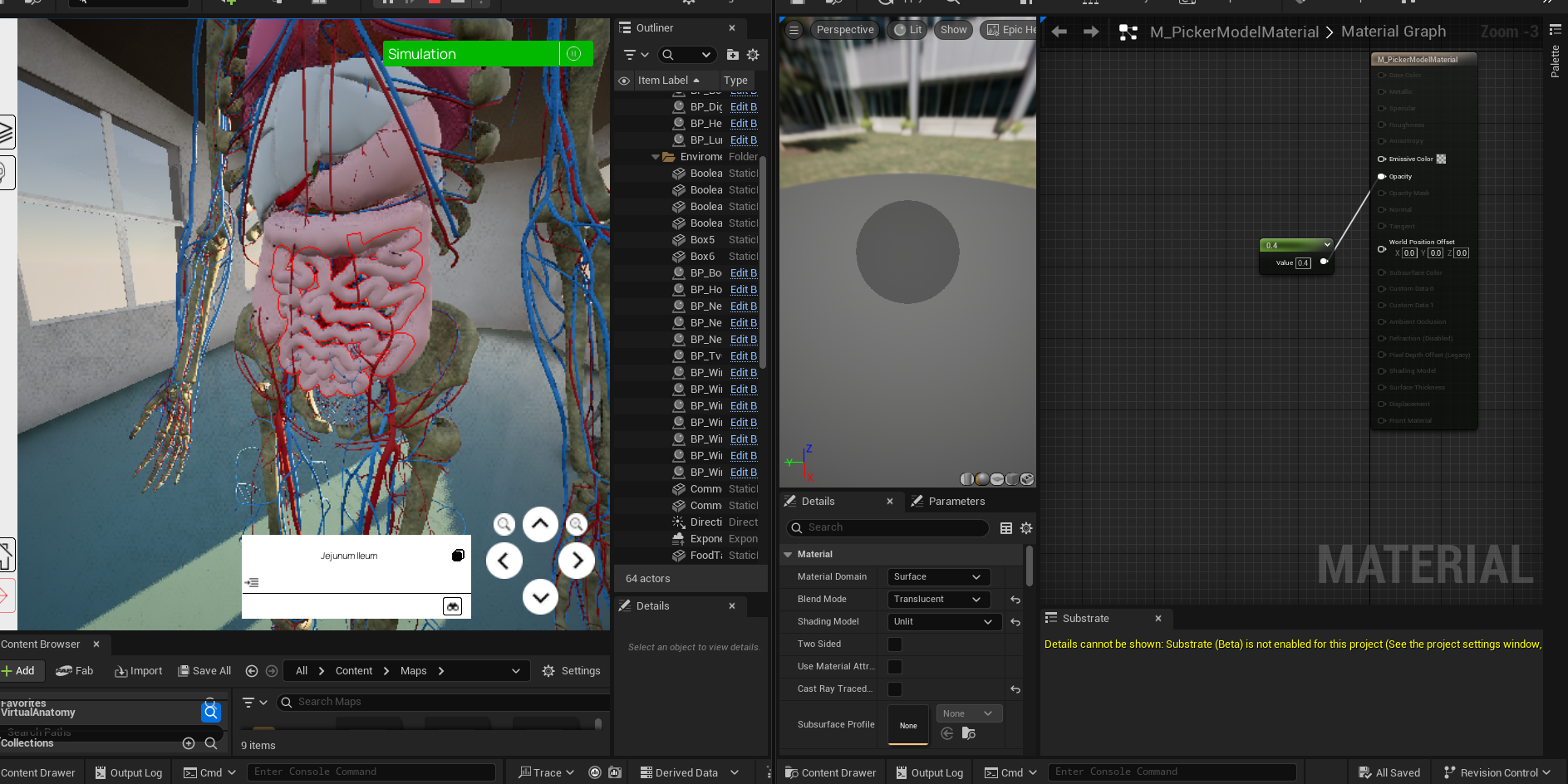 fixing an issue with organ highlighting methods
Feature Improvements
- Corrected tree view hierarchy — ensuring organs displayed correctly under their respective systems
- Improved mesh isolation and zoom functionality for better anatomical exploration
- Refined camera controls and input settings for more intuitive navigation
- Updated project documentation for future developers
Learning Journey
The Onboarding Phase (6 Weeks)
The first six weeks were dedicated to learning Unreal Engine and C++ — technologies that were entirely new to me.
My learning approach included:
- Following structured tutorials on Unreal Engine fundamentals
- Experimenting with engine features and capabilities
- Analyzing the existing project structure and codebase
- Testing functionalities to understand the application architecture
This foundation was essential for tackling the complex technical challenges that followed.
Tools & Technologies Mastered
- Unreal Engine — Game engine for 3D visualization
- C++ — Primary programming language
- JetBrains Rider — IDE for Unreal development
- Blueprint Visual Scripting — Unreal's visual programming system
- Version Control — Collaborative development practices
Collaboration & Communication
Team Collaboration
Working within the Data Science Lab meant constant collaboration:
- Daily coordination with Anan — Pair programming and problem-solving sessions
- Cross-functional work with designers — Ensuring visual consistency and UX quality
- Knowledge sharing with other students — Learning from different perspectives
Stakeholder Communication
Regular client meetings were held with representatives from HZ and JRCZ to:
- Gather feedback on application functionality
- Discuss requirements and future enhancements
- Align development priorities with educational needs
"During one of our first meetings, a nursing instructor expressed the urgent need for the product. This taught me how stakeholder input directly shapes development priorities."
Expert Consultation
A highlight of my internship was a brainstorming session with a former Application Specialist and Product Manager from Philips who had extensive experience with international healthcare projects. This conversation provided valuable insights into:
- Educational software design principles
- Long-term product vision
- Healthcare technology best practices
Key Deliverables
November Release
Through systematic bug fixing and stabilization efforts, we successfully delivered a stable MVP to the Nursing department at HZ Vlissingen.
Achievements:
- Crash-free packaged builds
- Functional tree view navigation
- Working slicer for anatomical cross-sections
- Intuitive camera controls
- Updated documentation
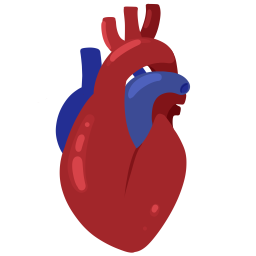 App icon designed by a colleague in the Data Science Lab
Lessons Learned
Technical Growth
- Debugging complex systems — Learned to trace errors through large codebases
- Reading unfamiliar code — Developed skills to understand existing architectures
- Prioritizing stability — Understood that stability often trumps new features
Professional Development
- Asking for help early — Recognized when to seek guidance vs. independent exploration
- Breaking down complex tasks — Learned to divide large problems into manageable pieces
- Managing expectations — Understanding what's realistically achievable in a given timeframe
Challenges & Growth Areas
UI Redesign Struggles: One area that proved challenging was redesigning the user interface without clear mockups or design direction. This experience taught me the importance of:
- Requesting design specifications upfront
- Collaborating earlier with designers
- Not spending excessive time on ambiguous tasks
Future of the Project
The Virtual Anatomy project continues to evolve. Future enhancements could include:
- Additional anatomical models and systems
- VR/AR integration for immersive learning
- Quiz and assessment features
- Multi-user collaboration capabilities
Reflection
Feedback from My Supervisor
"You've shown clear growth in working with Unreal Engine. You quickly understood the project structure and can independently analyze and solve problems, especially in bug fixing. Your technical contribution is strong — continue building confidence in sharing your ideas and taking initiative."
Personal Assessment
This internship transformed my understanding of professional software development:
| Skill Area | Before | After |
|---|---|---|
| Unreal Engine | None | Intermediate |
| C++ Development | Basic | Practical |
| Team Collaboration | Limited | Confident |
| Stakeholder Communication | Theory | Applied |
| Debugging Complex Systems | Basic | Strong |
Final Thoughts
My time at JRCZ was an invaluable experience. The combination of technical challenge, creative freedom, and supportive mentorship made it an ideal learning environment.
Tech Stack
Unreal Engine C++ Blueprints JetBrains Rider 3D Visualization Medical Education
This project was developed at Joint Research Centre Zeeland in collaboration with HZ University of Applied Sciences.
Gallery